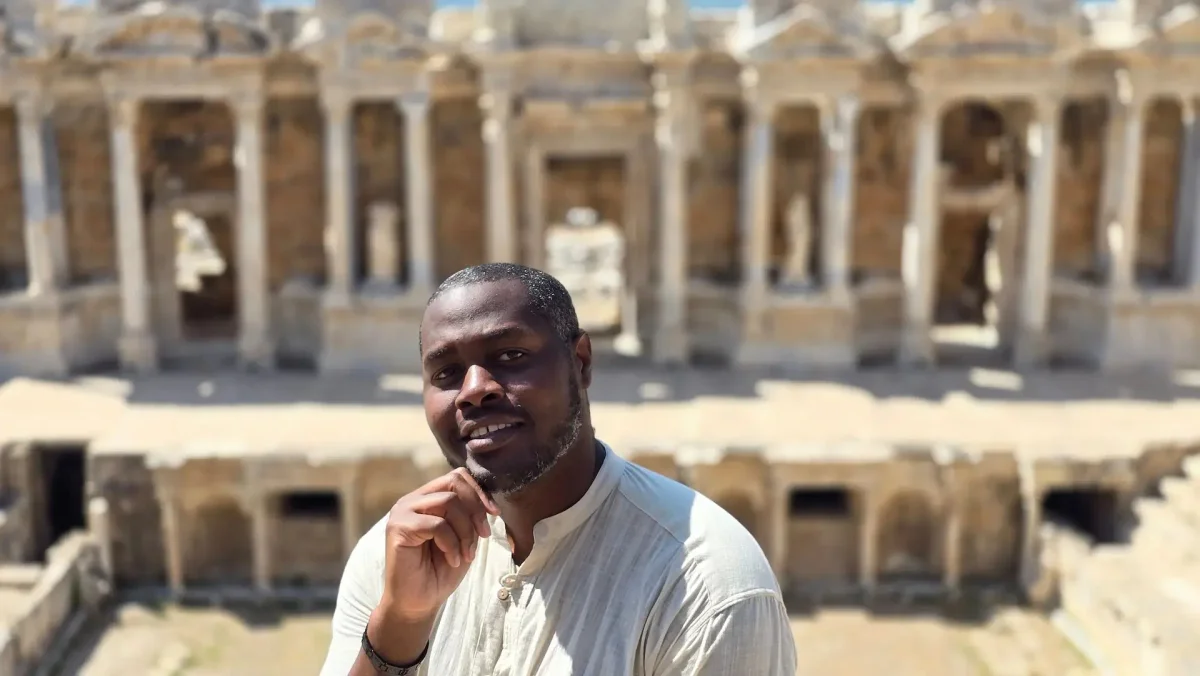
Andrew Ding, MD

About
Andrew Ding, MD, is a board-certified psychiatrist and psychotherapist listed in New Haven, whose practice, Axim Medicine, centres on existential, relational and spiritual questions and on psychedelic medicine. He offers psychedelic-assisted psychotherapy alongside ongoing therapy and medication management, mostly by telehealth.
Approach
He combines integrative Western medicine and neuroscience with psychoanalysis and Eastern spirituality. His methods include psychodynamic therapy, Internal Family Systems, Accelerated Resolution Therapy, AEDP, Deep Brain Reorienting, somatic work, acceptance and commitment therapy and exposure therapy, with lifestyle medicine on sleep, food, movement and time in nature. After a psychiatry residency at the Institute of Living at Hartford Hospital, he trained in psychodynamic psychotherapy at the Western New England Institute for Psychoanalysis, in ketamine-assisted psychotherapy at the Ketamine Training Center and in MDMA therapy through MAPS.
Who it is for
His clients include finance executives, tech founders, artists and special operations veterans, and above all people keen to explore and to grow. He says the work suits people willing to change, to meet consistently and to accept progress that is not linear.
Practical details
Sessions are mostly by telehealth. A free 20-minute video consultation comes first, then a 50-minute assessment. Follow-up and therapy appointments of 50 minutes cost $1,000 and 25-minute follow-ups $600. He does not take insurance but provides a superbill, and appointments cancelled with less than 24 hours’ notice are charged in full. Most clients meet weekly.
Care and safety
Psychedelic-assisted psychotherapy starts with an assessment of medical and psychological risks, then usually four to five preparation sessions, a dosing session and one or two integration sessions. At low doses the session allows conversation; at higher doses he stays present but speaks less. He also helps people weigh the risks of psychedelic experiences they plan on their own, and supports their preparation and integration.
Practices
- Trauma support
- Somatic
- Psychotherapy
- Spiritual development
- Ketamine assisted therapy
- Mindfulness
- Psychedelic integration
- Shadow work
Guide: Ketamine therapy, explained
Listed in the FTO directory. Publication in the FTO directory does not constitute an endorsement of a provider, service, event, or practice.